Articulating Hope
  • Home
  • Deacon Vernon's Blog
  • Speaking Engagements
  • Book Discussion Guide

Monday of Holy Week--How Are You A Witness?

4/10/2017

3 Comments

 
Picture
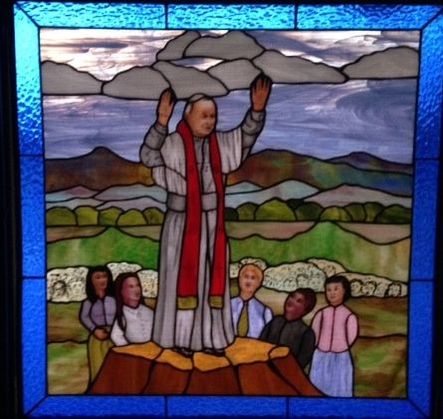
How do you stand up for the faith?  Are you willing to proclaim God's Word even when it is not popular to do so?  Holy Week reminds us that the cross is included in our journey of faith.  "Take up your cross daily and follow me."  The mandate is quite clear.

Here are a few reflection questions for today.

1. When was the last time you really studied your baptismal promises?
2. What emotions stir within you each week when you profess the creed?
3. Are you truly committed to following Christ or are you just interested in following him?  Clarify in your mind the difference between the two.

​Use these early days of Holy Week to prepare well for the Paschal Triduum.

3 Comments
micah k
4/23/2017 07:26:19 pm


This is how I stand up for my faith....


Dear Catholic Crusader,

Five hundred years ago in 1517, Martin Luther made public his 95 complaints against the Roman Catholic church (hereafter, RCC). Today, we shall do likewise, with another 95 reasons. However, in this critique, we will exclusively fixate on the nucleus of all Catholic doctrine called, Transubstantiation. This teaching is built on the premise that when the priest utters “This is my body” over bread and wine that the “combustible” syllables of these four words ignite with such power and energy that, unbeknownst to our cognizant senses, the substance of bread and wine miraculously change (“by the force of the words” says the Council of Trent; cf. Catechism of the Catholic Church, 1375). They are then abruptly replaced with something else entirely; namely, the very body, blood, soul and divinity of the Lord Jesus Christ in some mysterious form which leaves only the outward appearance of bread and wine (i.e., the color, shape, size, taste, weight and texture -- or "accidental" properties, remain unchanged in objective reality). It is claimed that the supernatural power that creates this miracle on a daily basis, 24 hours a day in Masses worldwide, “is the same power of Almighty God that created the whole universe out of nothing at the beginning of time” (Mysterium Fidei, 47). The question is: does the sacred rhetoric of Jesus lead us to conclude He intended it be recited like a magician recites his incantations? (Reason 6, 74). That at the recitation of these four words, the world is obligated to be transfixed on Transubstantiation???

To find the answer, the mindset of an archeologist was employed to not just scratch the surface of the Bible, but to dig into even deeper depths to see if this doctrine is the “most precious treasure of all” as it’s claimed to be (Mysterium Fidei, intro). If Transubstantiation is on course, it should stand out like a ship in the night sailing through the darkness with the floodlights of Scripture to guide it. Those of us in life rafts looking for salvation would then be more than happy to anchor our soul in the ocean of its truth. And yet, after going on this archeological expedition, we discovered the theological fossils did not at all fit the “mummified remains” of Jesus Christ being “buried” in the Eucharist. Rather, we unearthed 95 artifacts against it. Our primary excavation tools were the unshakable Scriptures, which God likens to a hammer that smashes a rock into pieces (Jeremiah 23:29). Our thesis conclusion, set forth here at the beginning, is that the skeletal framework of Transubstantiation is a bone of contention that must be hammered into pieces.

We should think that a rollercoaster of 95 reasons against this doctrine should at least pique your curiosity, let alone make you wonder if, like the calmness of a ferris wheel, you can so calmly refute them. The issue is far from inconsequential, since it’s claimed our very eternal destinies are at stake. So while sensitive to the fact that many are captivated by this doctrine, we are persuaded that the theological framework of the Bible conveys a persistent and vigorous opposition to this theory. God's word tells us to, "study to show yourself approved" (2 Tim 2:15) and we have indeed done just that. Keep in mind the foundational meaning of “love” is to desire the well being of another. If we did not care about the issues raised, we simply wouldn't do anything. But because the path of truth has been so little traveled and become overgrown with weeds, we have attempted to uproot them in this essay. It has been given to you in the spirit of 2 Corinthians 10:5, with the intent to, "demolish arguments and every pretension that sets itself up against the knowledge of God" (cf. Titus 1:9-13, Eph 5:11, 2 Tim 4:2, Romans 16:17-18).

Provoking this study was the 50 page book called, “This is my Body” by M. Shea. In the forward, we read that a fan found the book “unanswerable”, and hoped “some first-rate Protestant reads it and has the moxie to take up the debate.” The author concludes…

*** There is no reason whatsoever to believe that Jesus did not mean exactly what He said by, “This is my body” (p. 42).
*** Every shred of New testament evidence points to an apostolic faith in the Real Presence (p. 48).
*** [My] “theological house, once littered with reasons to disbelieve in the Real Presence, was now, spic and span” (p. 45).

We wholeheartedly reject all three of these irresponsible conclusions, and suggest the theological house the author lives in is built on sinking sand and made of glass, subject to shatter at any moment by the undercurrent flowing beneath it made up of the following 95 reasons.

It is vital to investigate and not just believe everything we hear (Prov 25:2; Luke 8:18;

Reply
micah k
4/23/2017 07:28:30 pm

Deception runs rampant on every topic under the sun, putting all of us in a position of being hoodwinked by the one, “who deceiveth the whole world” (Rev 12:9), so it is imperative that we be “vigilant” (1 Pet 5:8). Hence, there is nothing wrong in disputing the issues, even at the risk of (and knowing full-well) this polemic will be accused of being a worthless anti-catholic rant. Call it what you will. Yet, remember that Jesus was not always delicate, diplomatic and politically correct. He agitated His audience and was not the type to walk around with a limp wrist, brushing off His opponents with a feather duster. He swooped down like an eagle and insulted the religious leaders 16 times in Matthew 23. Neither was the apostle Paul any type of wall flower. He turned the world upside down with his much disputing (Acts 9:22, 17:2, 17:6, 17:17, 18:4, 18:19, 19:8-10; 19:26, 20:31, 24:25, 28:23). Therefore, if at times our tone seems harsh, you must realize that not only is there biblical precedent for it, but Catholicism has made it plain they consider any opposition to Transubstantiation, “satanical” (see our “Final Analysis”). Hence, they themselves are well aware of Scripture’s call not to take the mild-mannered approach when it comes to false doctrine. Christians must challenge the status quo, and to the alert mind, Jesus congratulates the ones who examine those who “claim they are apostles, but are not, and hast found them liars” (Revelation 2:2). To that end, we have strived to remain focused, showing “integrity, seriousness and soundness of speech that cannot be condemned, so that those who oppose may be ashamed” (Titus 2:6).

The almost “romantic fidelity” to Transubstantiation springs forth from the opinion that consuming the “organic and substantial” body of Christ in the Eucharist is necessary for salvation (CCC 1129 & 1355; Trent, "Concerning Communion", ch. 1 and “Concerning Communion Under Both Kinds”, ch. 3; Canon 1; Mysterium Fidei, intro). The word “Eucharist” (i.e., thanksgiving) was an early Christian way of referring to the Last Supper ordinance. Thus, if it’s true that in the Eucharist, Transubstantiation becomes the "center, source and summit of the Christian life" (CCC 1324, 1343), then we would agree the whole world ought to become Roman Catholic, and subsequently follow the intelligentsia of Rome which claims to be the center of all truth (CCC 834, 1383). On the other hand, if it is not true, then this doctrine must be ranked with those which Jesus says, “I hate” (Rev 2:15). Our burden here is to safeguard the gospel (Jude 1:3). If a religious system professing to be Christian is going to demand that something be done as a prerequisite for eternal life, it is vital to scrutinize this claim under the searchlight of Scripture and with “the mind of Christ” (1 Cor 2:16). Proverbs 25:2 says, "the honor of a king is to search out a matter". We shall do likewise.

Determined to test all things by Holy Writ (1 Thess 5:21; Acts 17:11, 2 Cor 10:5), the following 95 reasons have been compiled to an extravagant length to provoke you to consider the cognitive complexities of this doctrine which we conclude are biblically unbearable. We are so convinced the Bible builds a concrete case against this superstition, that we will not allow the things we have in common to suppress the more urgent need to confront the differences that divide us, such as Transubstantiation. We are told this issue directly impacts our eternal destiny, so it must not be ignored. The Lord Jesus came to divide and conquer by the truth of His word. He said, "Do you think that I have come to give peace on earth? No, I tell you, but rather division" (Luke 12:51-53).

That said, all sober-minded comments sent to this e-mail will receive a response. However, you must interact with at least one of the facts presented. Unfortunately, the standard party line is to charge critics with being clueless, and with a wave of the hand, “you do not understand Catholicism” becomes the reply of choice. However, this frequent retort is unacceptable. The introduction to the catechism states it was written for those who “want to know what the Catholic Church believes.” Will you say that there is no Protestant in the universe who understands what you believe? If so, the Pope has failed miserably in his mission. Now while it may be impossible to fully represent a view with which you disagree to the satisfaction of every opponent, we will strive for clarity and let the RCC speak for themselves in this essay as much as possible. Still, if you will accuse this writer of not understanding Catholicism, then kindly provide one non-catholic, living or dead, who does understand, yet at the same time still rejects your religion. We will then compare our complaints with theirs, and if

Reply
micah k
4/23/2017 07:30:08 pm

and if they match, as we suspect, then your accusation that we don’t understand, is simply dishonest.

For the full essay of 95 reasons, kindly e-mail me at
[email protected]

Reply


Leave a Reply.

    Archives

    March 2023
    February 2023
    January 2023
    December 2022
    November 2022
    October 2022
    September 2022
    August 2022
    July 2022
    June 2022
    May 2022
    April 2022
    March 2022
    February 2022
    January 2022
    December 2021
    November 2021
    October 2021
    September 2021
    August 2021
    July 2021
    June 2021
    May 2021
    April 2021
    March 2021
    February 2021
    January 2021
    December 2020
    November 2020
    October 2020
    September 2020
    August 2020
    July 2020
    June 2020
    May 2020
    April 2020
    March 2020
    February 2020
    January 2020
    December 2019
    November 2019
    October 2019
    September 2019
    August 2019
    July 2019
    June 2019
    May 2019
    April 2019
    March 2019
    February 2019
    January 2019
    December 2018
    November 2018
    October 2018
    September 2018
    August 2018
    July 2018
    June 2018
    May 2018
    April 2018
    March 2018
    February 2018
    January 2018
    December 2017
    November 2017
    October 2017
    September 2017
    August 2017
    July 2017
    June 2017
    May 2017
    April 2017
    March 2017
    February 2017
    January 2017
    December 2016
    November 2016
    October 2016
    September 2016
    August 2016
    July 2016
    June 2016
    May 2016
    April 2016
    March 2016
    February 2016
    January 2016
    December 2015
    November 2015
    October 2015
    September 2015
    August 2015
    July 2015
    June 2015
    May 2015
    April 2015
    March 2015
    February 2015
    January 2015
    December 2014
    November 2014
    October 2014
    September 2014
    August 2014
    July 2014
    June 2014
    May 2014
    April 2014
    March 2014
    February 2014
    January 2014
    December 2013
    November 2013
    October 2013
    September 2013
    August 2013
    July 2013
    June 2013
    May 2013
    April 2013

    Author

    This is my personal blog.  The opinions expressed are those of Deacon Vernon and the blog's readers.  This site operates independently and is not affiliated with any other entity. The information I provide is on an "as-is" basis. I make no representations as to the accuracy, completeness, or suitability of any information on this blog. I will not be liable for any errors or omissions in this information. Furthermore, I will not be liable for any losses, injuries, or damages arising from its use.

    RSS Feed

Powered by Create your own unique website with customizable templates.
